ACL Surgery Recovery Timeline at a Glance
Rehabilitation after ACL reconstruction gradually restores knee movement, muscle control, strength, endurance, running ability and finally sports-specific movement. The following timeline reproduces the prescribed protocol without changing its stages.
Day 1 to 4 Weeks After ACL Reconstruction
The early phase focuses on walking, restoring knee movement and activating the muscles around the knee. The aim is to prevent stiffness and regain control of the operated leg while following your prescribed brace instructions.
- Full weight bearing from the next day (with static knee brace ON/OFF as required)
- Knee bending exercise
- FFD correction
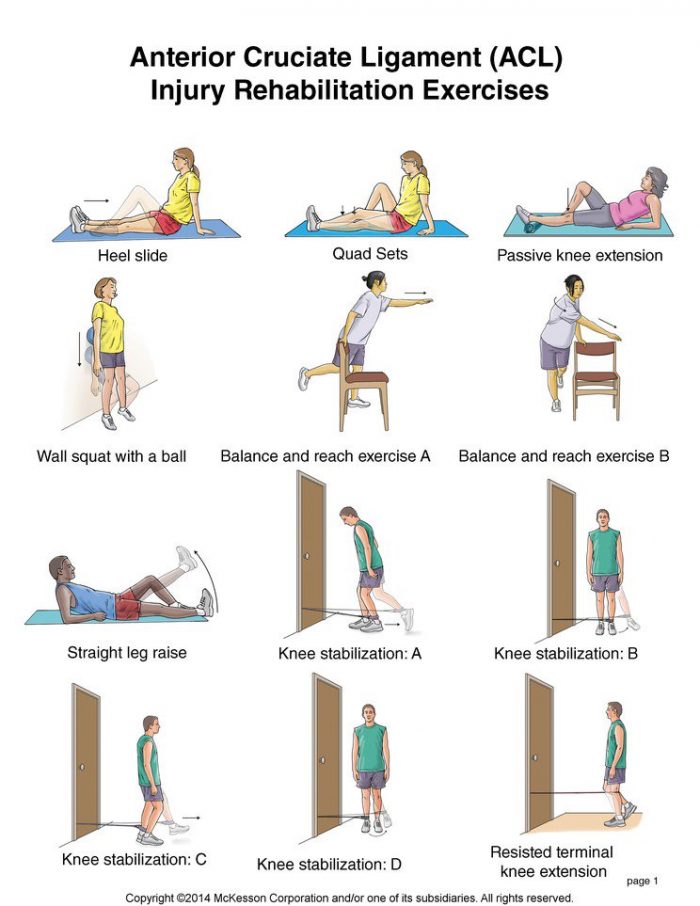
- Straight leg raising with weight (1 to 4 kg, 30 × 5 sets, 4 times a day)
- Static quadriceps
- Toe standing
Full Weight Bearing
Full weight bearing means standing and walking with your body weight through the operated leg from the next day. Use the static knee brace ON or OFF as instructed. Walk with a controlled pattern rather than limping or rushing.
From the next day • Brace ON/OFF as requiredKnee Bending Exercise
This exercise works on knee flexion—the ability to bend your knee. Gentle, repeated bending helps restore movement that is commonly reduced by postoperative swelling and stiffness. Perform the movement in a controlled manner and avoid forcing suddenly through pain.
FFD Correction
FFD means fixed flexion deformity, where the knee remains slightly bent and cannot fully straighten. FFD correction focuses on regaining full knee extension. Restoring straightening is an important early rehabilitation target for normal standing and walking.
Straight Leg Raising With Weight
Keep the knee straight and lift the entire leg while maintaining control of the thigh muscles. This exercise trains the quadriceps to hold the knee straight and improves control of the operated limb. The prescribed external resistance ranges from 1 to 4 kg; progress within this range only as advised.
1–4 kg • 30 repetitions × 5 sets • 4 times/dayStatic Quadriceps
Tighten the muscle at the front of the thigh without moving the knee. Think of pressing the back of the knee toward the bed while making the thigh firm. This is an isometric exercise and helps re-establish quadriceps activation after surgery.
Toe Standing
Rise onto your toes by lifting your heels from the floor, then lower with control. This activates the calf muscles and helps rebuild lower-limb strength and control needed for normal walking.
4 Weeks to 3 Months
Continue all exercises from the first phase. This stage introduces controlled cardiovascular exercise and progressive strengthening of the leg.
- All above +
- Static cycling
- Cross trainer
- Leg press
Static Cycling
A stationary bicycle provides repeated, controlled knee movement while improving endurance. Keep the movement smooth and avoid sudden resistance changes. Seat position and resistance should allow comfortable cycling without forcing the knee.
Cross Trainer
The cross trainer or elliptical provides a low-impact, repetitive movement pattern that trains the legs and cardiovascular system without the impact of outdoor running. Keep the motion controlled and symmetrical.
Leg Press
Leg press strengthens the quadriceps, hamstrings, gluteal muscles and the overall lower-limb chain. Use controlled movement and avoid jerky loading. Resistance should be progressed according to your rehabilitation supervision and knee response.
3 Months to 6 Months
Continue all previous rehabilitation exercises. During this phase, the programme progresses toward functional strength, resistance training and controlled running.
- All above +
- Half squats
- Theraband exercise
- Jogging (with slow acceleration and deceleration)
Half Squats
Half squats strengthen the quadriceps, hamstrings and hip muscles in a functional weight-bearing position. Keep the movement slow and controlled, with the knee tracking in line with the foot rather than collapsing inward.
Theraband Exercise
Elastic resistance bands can be used to progressively strengthen muscles around the knee and hip. The exact direction and band resistance can be selected according to the muscle group being trained and your current strength.
Jogging
Begin jogging with slow acceleration and slow deceleration. Avoid suddenly sprinting or stopping. The purpose is to reintroduce running forces gradually while maintaining controlled movement.
Slow acceleration + controlled decelerationAt 5 Months
This stage introduces deeper knee flexion and planned changes in running direction. These exercises begin preparing the knee for more complex movement patterns.
- Full squat
- Side running
- Back running
- Zig zag running
- Figure of 8 running
Full Squat
Progress from the earlier half squat to a full squat with controlled lowering and rising. Keep the movement balanced and avoid twisting the knee while entering or leaving the squat.
Side Running
Side running introduces lateral movement. It trains control when the body moves sideways rather than only forward and helps prepare for multidirectional activities.
Back Running
Backward running challenges coordination, lower-limb control and confidence in a movement direction that is different from ordinary jogging.
Zig-Zag Running
Zig-zag running introduces repeated planned direction changes. Start with controlled turns rather than aggressive cutting, and concentrate on keeping the knee aligned during each change of direction.
Figure-of-8 Running
Running in a figure-of-8 combines curves and repeated changes of direction. It helps bridge the gap between straight-line running and the multidirectional movement required in many sports.
At 6 Months: Jumping
- Jumping
Jumping introduces a higher level of loading because the knee must control both take-off and landing. Focus on a controlled landing position, balanced weight distribution and good alignment of the hip, knee and foot. Progression should remain supervised according to your recovery and movement control.
After 9 Months: Normal Sports Activities
- Normal sports activities
After 9 months, the protocol progresses to normal sports activities. Before unrestricted sport, your treating surgeon or rehabilitation professional should assess whether your knee is ready for the demands of your specific sport, particularly sports involving sprinting, jumping, pivoting or sudden direction changes.
Common Patient Questions After ACL Surgery
When can I put weight on my operated leg?
In this isolated ACL reconstruction protocol, full weight bearing starts from the next day, with the static knee brace ON/OFF as required.
When can I start cycling after ACL reconstruction?
According to this protocol, static cycling begins in the 4-weeks-to-3-months phase, while continuing the earlier exercises.
When can I start jogging?
Jogging is introduced in the 3-to-6-month phase, using slow acceleration and deceleration.
When do agility exercises start?
At 5 months, the protocol adds side running, back running, zig-zag running and figure-of-8 running, together with full squats.
When can I start jumping?
Jumping is introduced at 6 months.
When can I return to normal sports after ACL surgery?
This protocol places normal sports activities after 9 months. Clinical readiness should still be assessed before unrestricted participation.