Phase 1: Understanding the Injury and the Diagnosis
The Anterior Cruciate Ligament (ACL) is one of the primary stabilizing ligaments inside your knee. It prevents your shin bone (tibia) from sliding too far forward and provides crucial rotational stability. The vast majority of ACL tears are non-contact injuries. They typically happen when you rapidly decelerate, pivot suddenly, or land awkwardly from a jump, placing immense stress on the knee.
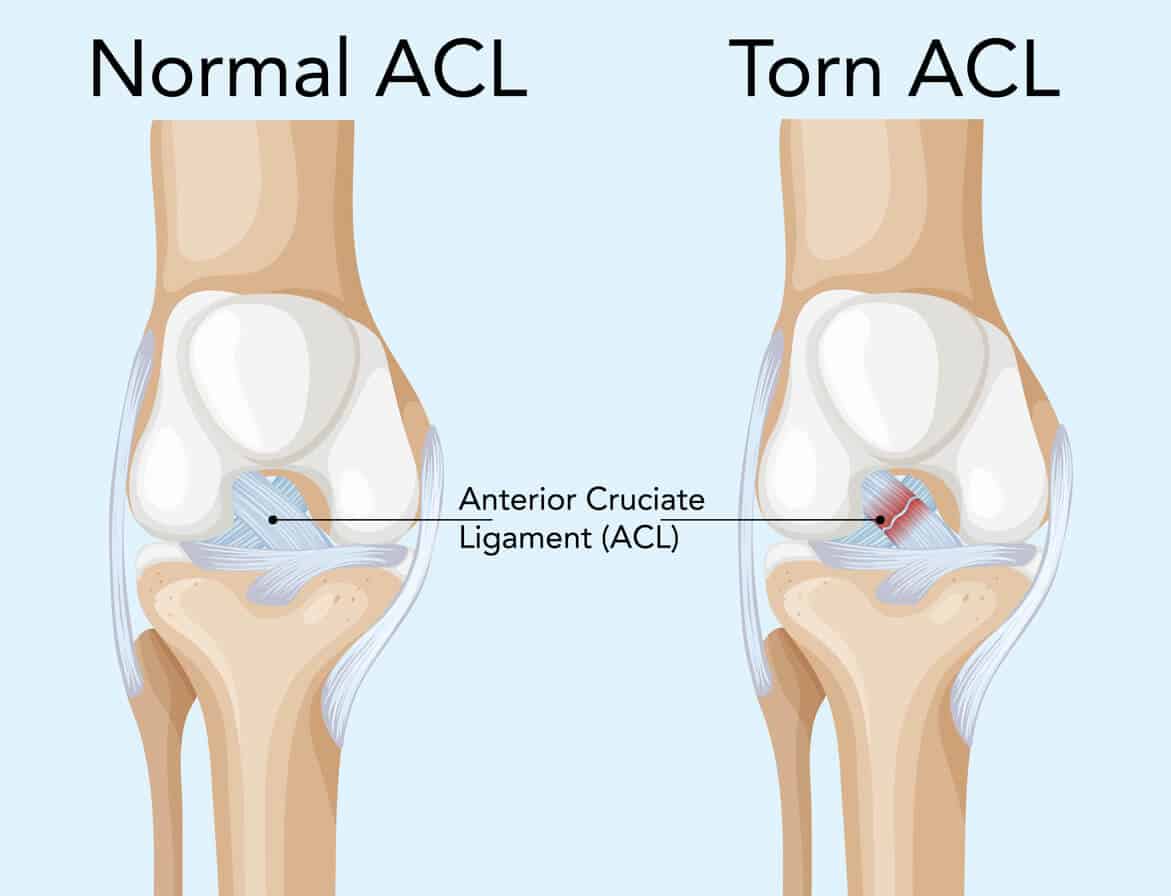
At the moment of injury, many patients feel or hear a loud "pop," which is almost immediately followed by joint swelling and a feeling that the knee is giving way. While a physical examination gives us a strong indication of an ACL tear, an MRI is the gold standard for confirmation. Interestingly, MRIs often reveal "bone bruises" (subchondral bone lesions) in up to 80% of acute ACL injuries. These bruises occur because the knee bones physically collide when the ligament snaps, but they typically resolve on their own within a few months of surgery.
Phase 2: The Pre-Surgery Waiting Period
One of the most common questions I get in the clinic is why we cannot perform the surgery the very next day. Operating on a swollen, acutely injured knee carries an exceptionally high risk of a complication called "arthrofibrosis." Arthrofibrosis is an aggressive scar tissue response that can permanently restrict your knee's ability to bend and fully straighten.
To ensure a safe surgery and a smooth recovery, we must wait 3 to 6 weeks for your knee to enter a "quiescent" (quiet) state. This means the initial swelling has significantly subsided, you have regained full passive straightening of the knee, and you can walk comfortably. During this waiting period, engaging your thigh muscles with physical therapy prevents severe muscle wasting and dramatically improves your post-surgical outcomes.
Phase 3: Crafting Your New ACL
Because a torn ACL resembles a frayed rope, it generally cannot be stitched back together. Instead, we perform a minimally invasive arthroscopic reconstruction, replacing the torn ligament with a new tissue graft.
Choosing the Right Graft: The choice of graft is highly customized. Options include the Hamstring Tendon (which requires a smaller incision and causes less front-of-the-knee pain), the Bone-Patellar Tendon-Bone (BPTB) graft (which heals bone-to-bone and is ideal for high-impact athletes or hypermobile patients), and the Quadriceps Tendon, an increasingly popular option that provides robust stability with very minimal donor-site pain.
Precision Engineering (IDEAL Concept): For your new ACL to function perfectly, it must be positioned with millimeter precision using a surgical philosophy known as the IDEAL tunnel placement. This ensures the graft is Isometric, utilizes Direct fibers, is placed Eccentrically and Anatomically, and experiences Low tension during movement, guaranteeing your knee moves naturally.
Phase 4: Joint Preservation & Infection Prevention
A successful surgery isn't just about the ACL; it is about preserving the entire knee joint. If your MRI shows a torn meniscus alongside your ACL tear, my absolute priority is to repair (stitch) it rather than remove it. Research conclusively shows that removing the meniscus leads to a three- to seven-fold increase in the risk of developing severe osteoarthritis later in life.
Furthermore, to virtually eliminate the risk of postoperative joint infections, our clinic adheres to advanced international protocols. Before implanting your new graft, we presoak it in a specialized vancomycin antibiotic solution. Studies analyzing over 24,000 patients have proven that this simple step reduces the risk of infection from 0.8% down to an astonishing 0.01%, all without harming the graft tissue.
Phase 5: Recovery and Pain Control
The first 48 hours after surgery are focused on minimizing pain and swelling so you can start moving immediately. We use opioid-sparing "multimodal analgesia," combining local nerve blocks (like an adductor canal block) with anti-inflammatory medications and advanced cryocompression (mechanized icing devices) to keep you highly comfortable.
After knee surgery, the brain reflexively "shuts down" the quadriceps (thigh) muscle. To combat this, we utilize Neuromuscular Electrical Stimulation (NMES). This safe, painless electrical pulse forces the muscle to contract, helping you bypass the brain's inhibition and rapidly restore your strength.
Phase 6: Rehabilitation, Culture & Returning to Sport
For patients with sedentary or desk-based occupations, returning to work typically occurs between 78 to 90 days post-surgery. In India, activities that require deep knee flexion—such as squatting or sitting cross-legged—are culturally essential. Extensive studies confirm that following structured home-based rehabilitation, safely returning to these deep-flexion postures does not cause chronic knee pain or harm the new graft.
If you wish to return to high-demand sports, time alone is not enough. We utilize objective functional testing, measuring your Limb Symmetry Index (LSI) to ensure your surgical leg is at least 90% as strong as your uninjured leg. Once cleared for sports, we strongly implement neuromuscular warm-up routines, like the FIFA 11+ program, which improves landing mechanics and reduces the risk of tearing your new ACL by up to 77%.