Understanding Ankle Fractures: Bimalleolar & Trimalleolar Injuries
The ankle joint (mortise) is a finely engineered mechanical socket formed by the lower ends of the shin bone (tibia and its inner projection, the medial malleolus) and the outer fibula bone (lateral malleolus), cradling the talus bone. When a person steps awkwardly in a pothole, slips on a wet floor, or experiences a twisting sports injury or road accident, powerful rotational torques snap one, two, or three malleoli[cite: 1].
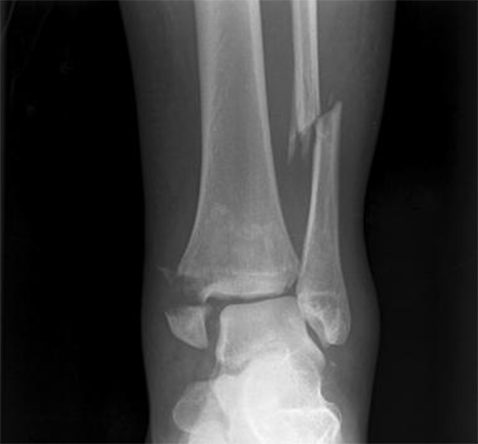
Bimalleolar Fractures: Involves breaks of both the lateral malleolus (fibula) and medial malleolus (tibia), completely destabilizing the ankle ring.
Trimalleolar Fractures: Involves the lateral malleolus, medial malleolus, and a third fracture at the posterior lip of the tibia. These complex fracture-dislocations require meticulous surgical reconstruction to re-establish joint congruity.
Plaster Cast vs. Surgery: When Is Emergency ORIF Mandatory?
While isolated, strictly non-displaced single malleolus cracks with an intact mortise can heal in a cast, displaced bimalleolar and trimalleolar ankle fractures are absolute surgical indications.
When Conservative Plaster Care Works:
- Isolated Undisplaced Lateral Malleolus Breaks: Stable ankle mortise with zero joint widening or talar shift on stress X-rays.
- Medically Unstable Patients: Severe systemic comorbidities where anesthetic risk forbids surgical intervention.
When Surgical Fixation (ORIF) Is Mandatory:
- Any Joint Displacement or Talus Shift: Even a 1 mm shift of the talus inside the ankle socket reduces joint contact area by over 40%, guaranteeing rapid post-traumatic osteoarthritis.
- Bimalleolar & Trimalleolar Instability: Both sides of the ankle ring are broken, causing the joint to subluxate or dislocation entirely.
- Syndesmosis Disruption: Tearing of the stabilizing ligaments between the shin bones, requiring mechanical realignment.
Surgical Techniques: ORIF, Malleolar Plates & Syndesmosis Screws
Open Reduction and Internal Fixation (ORIF) of the ankle restores exact millimeter alignment across the joint mortise[cite: 1]:
| Anatomical Component | Surgical Technique & Hardware | Biomechanical Goal |
|---|---|---|
| Lateral Malleolus (Fibula) | Posterolateral or lateral incision; anatomical titanium locking plate secured with bicortical screws across the fracture line[cite: 1]. | Restores exact fibular length and rotational alignment, preventing lateral talar tilt. |
| Medial Malleolus (Tibia Inner) | A anteromedial incision fixing the broken inner bump using two parallel headless or threaded compression screws[cite: 1]. | Re-establishes the medial buttress against outward sliding of the foot. |
| Posterior Malleolus (Back Lip) | Posterior/posterolateral approach with direct screw fixation or buttress plating if the fragment exceeds 25% of the joint surface. | Restores joint stability at the back of the ankle during plantarflexion. |
| Syndesmosis Stabilization | Trans-syndesmotic positional screw or flexible suture-button fixation (TightRope) connecting fibula to tibia[cite: 1]. | Holds the distal tibia and fibula tightly together while ruptured syndesmotic ligaments heal. |
Risks of Inadequate Treatment: Chronic Instability & Arthritis
Failing to achieve precise anatomical reduction during ankle surgery or ignoring syndesmal widening leads to severe long-term complications:
- Debilitating Post-Traumatic Ankle Arthritis: Cartilage wear caused by unreduced joint steps or widened mortises results in chronic, grinding pain, stiffness, and joint swelling within 1 to 3 years.
- Chronic Ankle Instability: Unhealed ligament complexes cause recurrent giving way of the ankle, frequent sprains, and subjective joint looseness.
- Peroneal Tendon Irritation & Stiffness: Hardware prominence or scar adhesions around the outer ankle can restrict smooth foot movement.
Time-Tested Imported Implants: High-Strength Titanium Systems
The ankle joint bears compressive forces up to 5 times body weight during walking and up to 8 times during running. Low-grade plates bend under these loads, causing the reduction to fail.
Global Pioneer Systems Deployed at Our Center
We utilize certified, time-tested imported titanium distal fibula and malleolar plating systems[cite: 1]:
These implants feature low-profile, contoured designs specifically profiled for the thin soft-tissue envelope of the ankle, reducing wound irritation and skin breakdown.
Operating Room Sterility: Protecting the Delicate Ankle Envelope
The skin around the ankle and malleoli is exceptionally thin with sparse subcutaneous fat. Post-surgical swelling and infection risks require rigorous sterile controls.
Multi-Layered Trauma Sterility Protocols
- Laminar Airflow Theatres: Positive-pressure HEPA filtration minimizing airborne bacterial contamination over the surgical site.
- CSSD Monitored Autoclave Cycles: Strict sterility assurance for all precision ankle reduction clamps, bone holding forceps, and drill guides.
- Meticulous Soft-Tissue Handling: Atraumatic tissue retraction and tension-free plastic closure to ensure pristine wound healing without edge necrosis.
Phased Recovery Timeline: From ORIF to Unassisted Walking
Rigid internal fixation aligns the bone fragments securely, but protected rehabilitation is essential for biological healing[cite: 1]:
| Timeframe | Bone & Joint Status | Permitted Foot Function | Rehabilitation & Physiotherapy Focus |
|---|---|---|---|
| Week 1 to 2 | Surgical incisions heal; plates and screws hold ankle mortise; swelling managed with elevation[cite: 1]. | Non-weight bearing using a walker or crutches; active toe wiggles and knee exercises[cite: 1]. | Stitches or staples removed at Day 12–14; placement in a controlled ankle motion (CAM) boot. |
| Weeks 3 to 6 | Early bone healing and ligamentous repair consolidation. | Touch-down weight bearing in CAM boot as advised by surgeon[cite: 1]. | Gentle active ankle range of motion exercises (plantarflexion and dorsiflexion); avoiding inversion/eversion. |
| Weeks 6 to 12 | Bridging bone callus visible on follow-up digital X-rays. | Transitioning to partial weight bearing, progressing to full weight bearing in supportive shoes. | Progressive resistance exercises with elastic bands, proprioceptive balance boards, gait training. |
| Months 3 to 6 | Complete cortical remodeling and solid structural consolidation. | Unrestricted walking, stair climbing, driving, and resumption of normal daily activities. | High-impact sports conditioning, agility drills, and full functional recovery. |
Surgery Costs & Cashless Mediclaim in Jamshedpur
Ankle fracture ORIF package costs depend on whether the injury is bimalleolar or trimalleolar, whether syndesmosis screw or tightrope fixation is required, and the hospital room category selected.
Emergency Cashless Insurance & TPA Support
We cover almost all major private health insurance policies, corporate TPAs, and recognized health panels.
Because acute accidental ankle fractures are treated as emergency surgical admissions, health insurance plans cover hospitalization without standard waiting periods. Families should share the patient's insurance card and accident details directly on our clinic WhatsApp at +91 7739798850 for immediate pre-authorization desk assistance.
Confirm on whatsappOur administrative desk provides transparent, itemized financial guidance covering imported titanium plate/screw costs, OT consumables, anesthesia fees, and follow-up care with zero hidden surprises.
Frequently Asked Questions by Patients & Families
What is the difference between a bimalleolar and trimalleolar ankle fracture?
A bimalleolar fracture involves breaks in both the lateral malleolus (outer ankle bone) and medial malleolus (inner ankle bone). A trimalleolar fracture involves those two bones plus a third fracture at the posterior lip of the tibia (back of the ankle joint). Both are inherently unstable joint injuries requiring precise surgical realignment.
How long does a broken ankle take to heal after surgery?
Bone union typically occurs within 10 to 12 weeks. Regaining full, pain-free ankle range of motion, reducing swelling, and returning to normal walking usually takes 3 to 6 months of dedicated rehabilitation.
What is syndesmosis fixation and why is it needed?
The syndesmosis is a powerful set of ligaments holding the tibia and fibula bones together just above the ankle joint. In high-energy or severe twisting fractures, these ligaments rupture, causing the ankle mortise to widen. A syndesmosis screw or tightrope fixation is used during surgery to hold the bones tightly in their correct anatomical position while the ligaments heal.
Can an unstable bimalleolar ankle fracture be treated in a plaster cast without surgery?
No. When the ankle joint alignment is displaced or shifted, casting alone cannot maintain the joint mortise. Unaligned ankle bones create abnormal joint contact pressure, leading rapidly to disabling post-traumatic arthritis and chronic pain within months.
Is ankle fracture ORIF surgery covered under cashless health insurance in Jamshedpur?
Yes. Acute traumatic ankle fractures resulting from slips, falls, or road accidents are treated as emergency surgical admissions covered under private health insurance policies and corporate TPAs without waiting periods.
Clinical References & Scientific Evidence
1. Rüedi TP, Buckley RE, Moran CG. "AO Principles of Fracture Management." AO Foundation / Thieme. 2007.
2. Lange J, et al. "Functional and radiographic outcomes of bimalleolar and trimalleolar ankle fractures treated with ORIF." Journal of Bone & Joint Surgery. 2015;97(4):301-308.
3. Egol KA, et al. "Ankle fractures: functional outcomes after surgical treatment." Orthopedic Clinics of North America. 2001;32(1):65-77.