Understanding Distal Radius Wrist Fractures: The Wrist Joint Break
The distal radius is the larger of the two forearm bones at the point where it forms the wrist joint. When a person trips or slips and braces themselves with an outstretched hand (FOOSH — Fall On Outstretched Hand), the direct impact transmits upwards, cracking or shattering the delicate bone end.
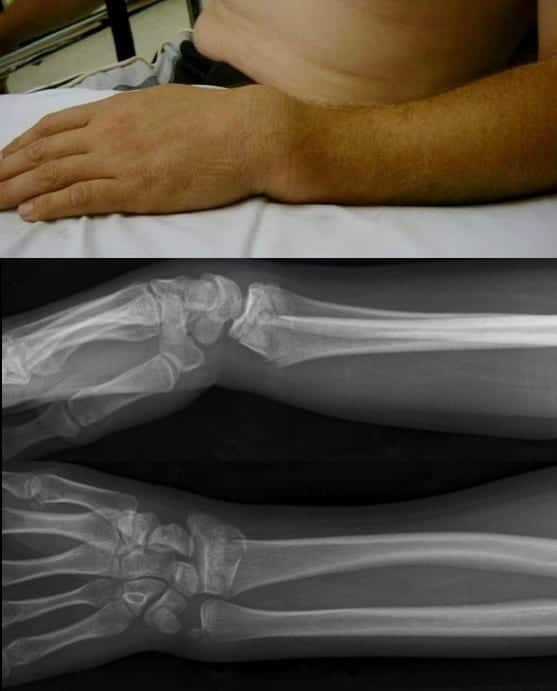
In younger patients, this commonly results from two-wheeler falls on roads like Marine Drive or industrial accidents, producing high-energy comminuted breaks with multiple fragments[cite: 1]. In elderly individuals with osteoporosis, even a minor slip in the bathroom or tripping over a step can cause the bone to crush backwards, creating the hallmark "dinner-fork deformity" (चम्मच जैसा कलाई मुड़ जाना).
Plaster Cast vs. Surgery: How the Treatment Decision Is Made
Not every broken wrist requires an operation. If bone fragments remain in acceptable anatomical alignment without disrupting the smooth joint surface, a lightweight plaster slab or cast holds the bone securely while natural bone callus forms over 6 weeks.
When Plaster Cast (Conservative Management) Works:
- Undisplaced Fractures: Bone fragments are well aligned with no step-off inside the radiocarpal joint.
- Acceptable Alignment Parameters: Intra-articular step-off is less than 2 mm, radial inclination remains over 15 degrees, and dorsal tilt is under 10 degrees.
- Low Functional Demand: Medically fragile elderly individuals where systemic risks of surgery outweigh structural deformity concerns.
When Surgical Fixation (ORIF / CRIF) Is Mandatory:
- Intra-Articular Surface Disruption (Joint Surface Step-Off > 2 mm): Any uneven step within the joint cartilage causes friction during daily movement, leading rapidly to debilitating post-traumatic wrist arthritis within 1 to 2 years.
- Radial Shortening (> 3 mm Height Loss): When the radius bone collapses downward, the ulna bone becomes relatively longer and bumps painfully against the small wrist bones (ulnocarpal impingement), permanently blocking smooth forearm rotation.
- Secondary Displacement in Cast: Fractures that slip out of position between Day 7 and Day 14 as soft-tissue swelling subsides inside the cast.
- Open / Compound Wounds: Fractures where the skin is punctured require urgent surgical wash, debridement, and rigid stabilization to prevent deep bone infection[cite: 1].
Surgical Techniques: Volar Locking Plates (ORIF) vs. Pinning (CRIF)
Modern wrist reconstruction prioritizes stable internal fixation that allows immediate finger and wrist movement, avoiding the stiff, frozen joints caused by weeks of heavy plaster casting[cite: 1].
| Surgical Technique | How It Works | Best Indicated For | Key Functional Advantages |
|---|---|---|---|
| Anatomical Volar Locking Plate (ORIF) | A precontoured titanium plate placed on the palmar side of the radius, anchored with fixed-angle locking screws into the bone fragments. | Unstable intra-articular breaks, osteoporotic fractures in active adults, and comminuted collapses[cite: 1]. | Gold standard. Rigid biomechanical stability allows immediate active finger movement and gentle wrist movement within 48 to 72 hours[cite: 1]. |
| Percutaneous K-Wire Pinning (CRIF) | Smooth surgical wires driven through the skin under C-Arm X-ray guidance to pin large fragments together without opening the site[cite: 1]. | Simple extra-articular pediatric fractures or elderly patients unable to tolerate open surgery[cite: 1]. | Minimally invasive and cost-effective; requires cast protection, and wires are removed at 4 to 6 weeks[cite: 1]. |
| Bridging External Fixator | Pins placed above and below the wrist connected to an external carbon-fiber rod frame to pull fragments into place via ligamentotaxis[cite: 1]. | Severe open/compound fractures with dirty wounds or severely crushed bone[cite: 1]. | Protects damaged skin and preserves limb length without placing metal plates inside contaminated wounds[cite: 1]. |
Time-Tested Imported Implants: Why We Use Titanium Locking Systems
The wrist joint handles significant rotational and gripping loads. Low-grade plates or soft screws can strip their threads or bend when you try to grasp objects, causing the bone to collapse back into a crooked position.
Global Pioneer Systems Deployed at Our Center
We deploy certified, time-tested imported titanium locking plate systems engineered with precise subchondral screw trajectories[cite: 1]:
Do Volar Plates Need to Be Removed Later? Modern medical-grade titanium implants are completely inert and biocompatible. In over 95% of adult patients, the plate remains safely inside the body for life without causing pain, corrosion, or airport security alarms.
Risks of Neglected or Improperly Set Wrist Fractures
Accepting poor alignment or relying on unmonitored tight bandaging can lead to long-term physical impairment:
- Permanent Dinner-Fork Malunion: If the radius heals shortened and tilted backward, the hand remains visibly crooked, making basic tasks like writing or holding a cup awkward.
- Loss of Forearm Pronation & Supination: Radial shortening causes the ulna bone head to impinge against the wrist carpus. Patients find themselves unable to turn their palm fully upward to receive food or turn keys.
- Post-Traumatic Wrist Osteoarthritis: An unreduced joint step-off erodes the wrist cartilage, resulting in chronic, throbbing pain and swelling during simple gripping activities.
- Complex Regional Pain Syndrome (CRPS / Sudeck's Dystrophy): Tight casts or sustained nerve compression can trigger intense neurovascular pain, stiffness, and severe swelling throughout the fingers.
Operating Room Sterility: Protecting Wrist Joints from Infection
Surgical fixation of the wrist demands immaculate infection-control protocols. Even a minor infection near the wrist flexor tendons or joint capsule can cause tendon adhesion, stiffness, or chronic osteomyelitis.
Multi-Layered Infection Prevention Protocols
- Laminar Airflow Operating Theatres: Ultra-clean HEPA-filtered air circulation continuously sweeping airborne contaminants away from the sterile surgical field.
- Central Sterile Services (CSSD): Monitored, multi-stage autoclave sterilization cycles for all micro-trauma drills, C-Arm drapes, and delicate wrist reduction instruments.
- Sub-Millimeter Soft-Tissue Handling: Meticulous preservation of the pronator quadratus muscle and protective coverage of the flexor pollicis longus (FPL) tendon to ensure smooth tendon gliding without friction.
- Evidence-Based Prophylaxis: Target-specific perioperative antibiotic coverage and cosmetic subcuticular skin closure for clean wound healing.
Phased Recovery Timeline: From Surgery to Full Grip Strength
Internal fixation stabilizes the bone fragments immediately, but natural biological remodeling takes several months:
| Timeframe | Bone Healing Status | Allowed Hand & Arm Function | Physiotherapy & Exercise Focus |
|---|---|---|---|
| Week 1 to 2 | Incision heals; internal titanium plate securely holds alignment; hematoma organizes[cite: 1]. | Gentle active finger flexing and extension; holding a spoon; light mobile typing; active shoulder and elbow movement[cite: 1]. | Immediate finger gliding exercises to prevent swelling and tendon stiffness; keeping hand elevated above heart level[cite: 1]. |
| Weeks 3 to 6 | Early biological callus forms; soft tissues consolidate around the hardware. | Light daily activities (writing, holding a cup of tea, buttoning shirts, desk/computer work). | Supervised wrist flexion, extension, and forearm rotational drills (pronation and supination); gentle putty exercises. |
| Weeks 6 to 12 | Solid radiographic bone union visible on checkup digital X-rays. | Lifting moderate weights (up to 3–5 kg); driving two-wheelers and cars; resumption of normal domestic chores. | Progressive resistance exercises; grip-strengthening squeeze balls; active stretching against resistance. |
| Months 3 to 6 | Complete cortical remodeling; bone reaches pre-injury strength. | Unrestricted heavy manual labor, industrial work, and gym/sports activities. | Full sports-specific drills, push-ups, and heavy lifting tasks. |
Surgery Costs & Cashless Mediclaim in Jamshedpur
Wrist fracture surgery expenses vary depending on whether the injury is extra-articular or a complex multi-fragment break, the choice of imported titanium anatomical locking plate, and hospital room category.
Emergency Cashless Insurance & TPA Support
We cover almost all major private health insurance policies, corporate TPAs, and recognized health panels.
Because acute accidental fractures are treated as medical emergencies, most health policies cover hospitalization without standard waiting periods. Families should share the patient's insurance card and accident details directly on our clinic WhatsApp at +91 7739798850 for immediate pre-authorization desk assistance.
Confirm on whatsappOur administrative desk provides itemized financial guidance covering imported titanium plate costs, OT charges, anesthesia fees, and post-discharge dressings with complete transparency.
Frequently Asked Questions by Patients & Families
How long does it take for a broken wrist to heal completely?
Clinical and radiological bone union typically occurs in 6 to 8 weeks. Recovering full functional grip strength and suppleness in the joint takes approximately 3 to 6 months with progressive wrist and hand rehabilitation exercises.
Can my wrist fracture be treated without an operation?
Yes. If the fracture is undisplaced or remains anatomically aligned following closed reduction (articular step-off under 2 mm and acceptable radial length), a well-molded plaster cast is adequate. Regular checkup X-rays at day 7 and 14 are necessary to confirm the bone does not slip as swelling subsides.
Does the titanium plate inside my wrist need to be removed later?
In the vast majority of patients, modern low-profile titanium volar plates remain permanently in place without causing discomfort, tendon irritation, or metal detector triggers. Removal is only contemplated if hardware causes soft-tissue friction or upon specific patient request after solid bone union (typically after 12 to 18 months).
When can I start moving my fingers after wrist surgery?
Active finger, thumb, elbow, and shoulder mobilization begins immediately on postoperative Day 1. Rigid internal plate fixation stabilizes the bone internally, preventing tendon adhesion, swelling, and permanent finger stiffness.
Will airport security metal detectors beep because of my titanium wrist plate?
No. Certified medical implants are constructed from high-grade titanium alloys that are non-ferromagnetic. Standard airport walk-through detectors do not trigger for internal wrist plates.
Clinical References & Scientific Evidence
1. Rüedi TP, Buckley RE, Moran CG. "AO Principles of Fracture Management." AO Foundation / Thieme. 2007.
2. Orbay JL, Touhami E. "Current concepts in volar fixed-angle plate fixation for unstable distal radius Wrist fractures." Clinical Orthopaedics and Related Research. 2006;445:58-67.
3. Arora R, et al. "A prospective randomized trial comparing nonoperative treatment with volar locking plate fixation for displaced and unstable distal radial fractures in patients sixty-five years of age and older." The Journal of Bone & Joint Surgery (Am). 2011;93(23):2146-2153.