When Is Total Hip Replacement (THR) Necessary?
The hip is a high-demand "ball-and-socket" joint consisting of the femoral head (ball) fitting smoothly inside the acetabulum (socket). Total Hip Arthroplasty is indicated when this articular surface is structurally worn or destroyed, making normal weight-bearing, sitting, and walking severely painful.
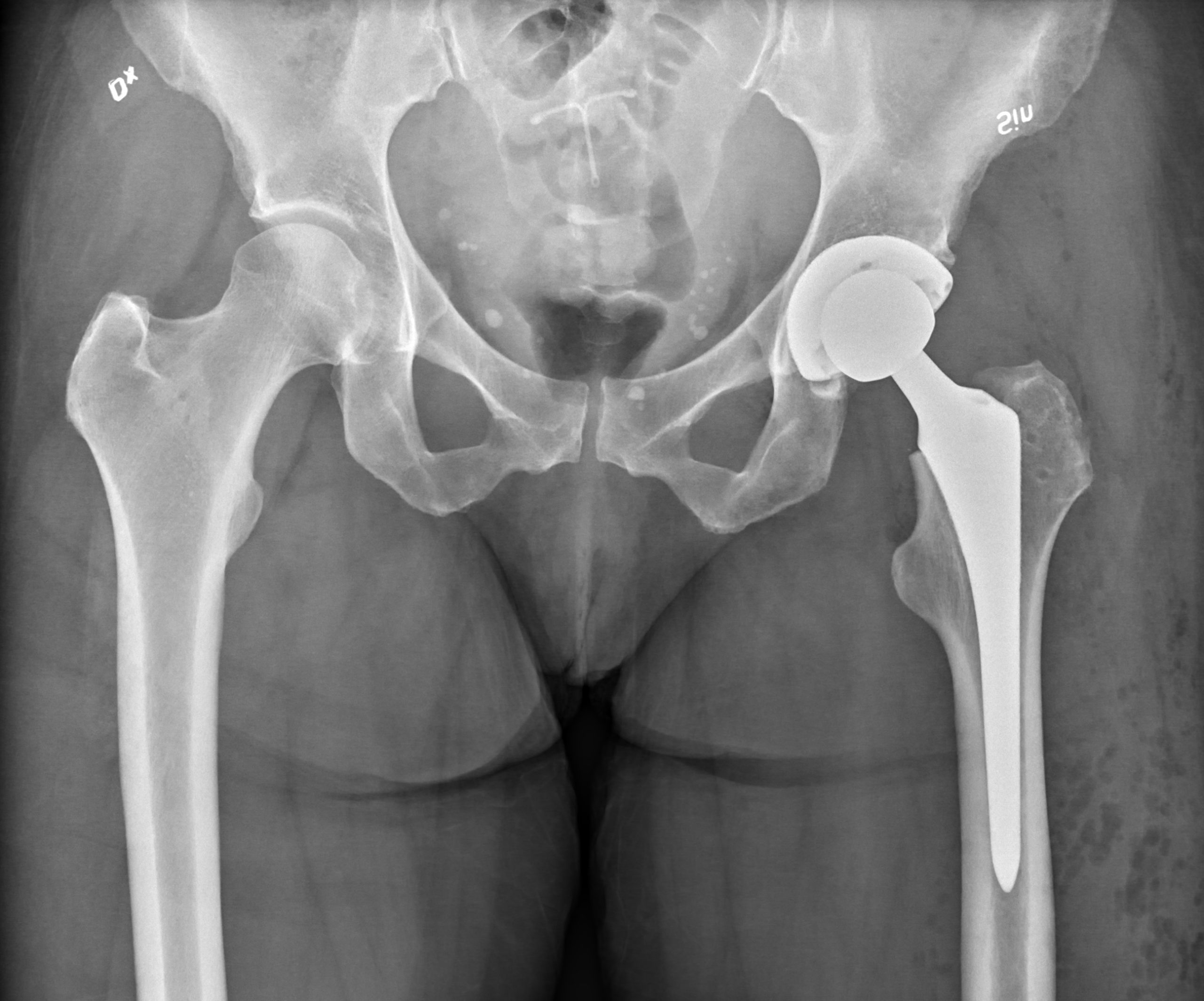
In Jharkhand and surrounding regional districts, the most frequent clinical indications include:
- Avascular Necrosis (AVN) of the Femoral Head: Impairment of microvascular blood supply to the femoral head—frequently seen in young adults following steroid exposure, alcohol consumption, post-COVID vasculitis, or trauma. Once the head progresses past Stage 2 to bone collapse (Ficat-Arlet Stage 3 or 4), hip replacement is the only definitive cure.
- Advanced Primary or Secondary Osteoarthritis: Severe cartilage erosion leading to bone spurs (osteophytes), joint space obliteration, and agonizing groin or thigh pain.
- Ankylosing Spondylitis & Rheumatoid Arthritis: Chronic autoimmune inflammation causing complete bony fusion (ankylosis) or severe erosive destruction of the hip socket.
- Elderly Fracture Neck of Femur: Displaced intracapsular femoral neck fractures in active geriatric individuals, where native femoral head necrosis is inevitable without prosthetic arthroplasty.
- Post-Traumatic Arthritis & Failed Fixations: Secondary arthritis following previous acetabular fractures or failed dynamic hip screws (DHS).
Modern Hip Arthroplasty: Muscle Preservation & Precise Offset
Total hip replacement is not merely replacing bone; it is an architectural restoration of your pelvic biomechanics, femoral offset, and limb length.
Tissue-Sparing Posterior / Anterolateral Approaches: We preserve critical abductor muscle function (gluteus medius). By navigating clean intermuscular planes and meticulously repairing the posterior capsule and external rotators at closure, we ensure immediate joint stability, prevent post-operative limping (Trendelenburg gait), and drastically reduce dislocation risks.
Restoring Limb Length & Offset: Pre-operative digital templating ensures millimeter-accurate neck cuts and cup placement. This equalizes leg length discrepancy caused by femoral head collapse and restores natural abductor muscle lever arms, allowing you to walk symmetrically without an awkward lurch.
Time-Tested Imported Implants: Why Brand Heritage Matters
In hip replacement, the femoral stem and acetabular cup must fuse biologically with living bone. Long-term international registry data (such as the UK National Joint Registry and Australian Registry) demonstrate that implant design, metallurgy, and surface coatings directly dictate whether a hip replacement lasts 10 years or 30+ years.
We exclusively deploy time-tested, FDA/CE-cleared imported hip systems from global orthopaedic pioneers, completely refusing non-standard local clones or unverified hardware:
Global Pioneer Systems We Routinely Utilize
These systems boast 20 to 30+ years of tracked clinical registry survival rates exceeding 95%:
| System Component | Imported Gold-Standard Brands | Clinical Advantages & Ingrowth Biology |
|---|---|---|
| Uncemented Femoral Stem | DePuy CORAIL® (Fully HA-coated) Stryker Accolade® II (SOMA designed) Smith & Nephew POLARSTEM® |
Titanium alloy stems featuring plasma-sprayed Hydroxyapatite (HA) coatings. Stimulates rapid bone osteointegration directly into the stem surface, creating a permanent biological bond within 6 to 12 weeks. |
| Cemented Femoral Stem (Geriatric/Osteoporotic) | Stryker Exeter™ DePuy C-Stem™ AMT |
Polished, double-tapered collarless stems. Internationally renowned as the undisputed benchmark for osteoporotic bone, distributing compressive hoop stresses safely across the cement mantle. |
| Uncemented Acetabular Shell | DePuy Pinnacle® Stryker Trident® II Tritanium® Smith & Nephew R3® |
Highly porous 3D-printed titanium cups mirroring human trabecular bone structure. Achieves immediate high-friction press-fit stability and deep cellular bone ingrowth. |
Ceramic Bearings: Maximum Longevity for Young & Active Patients
For young AVN patients (aged 25 to 55), eliminating friction and microscopic wear debris is critical to avoid revision surgery decades later. We customize the articulation to your biological age:
- Delta Ceramic on Highly Cross-Linked Polyethylene (Ceramic-on-Poly): The modern gold standard. A scratch-resistant BIOLOX® delta ceramic head articulates against an antioxidant (Vitamin-E) cross-linked polyethylene liner, delivering ultra-low wear rates and zero risk of metal ion toxicity.
- Delta Ceramic on Delta Ceramic (Ceramic-on-Ceramic): Lowest theoretical wear rate of any artificial bearing surface, ideal for very young patients demanding maximum wear resistance.
- Dual Mobility Constructs: Features a dual-articulation bearing inside the cup. Specifically chosen for patients with neurological weakness, neuromuscular imbalance, or severe spinal deformities to virtually eliminate dislocation risk.
Operating Room Sterility: Uncompromising Infection Prevention
In total hip replacement, preventing prosthetic joint infection (PJI) is our most critical safety priority. Because foreign implants have no natural blood supply to combat bacteria, absolute surgical sterility is non-negotiable.
We operate exclusively in accredited hospital theatres that maintain world-class infection-control infrastructure:
Multi-Layered Surgical Infection Safeguards
- Laminar Airflow Operating Theatres: Ultra-clean positive-pressure HEPA filtration continuously sweeping airborne micro-particulates away from the open hip joint.
- Hospital Central Sterile Services (CSSD): Monitored, multi-stage autoclave sterilization protocols for all precision broaches, reamers, and implant impactors.
- Dedicated Joint Replacement Nursing Staff: Operation theatre technicians and surgical nurses trained exclusively in sterile handling of modular prosthetic implants.
- Advanced Medical Barriers: Impermeable adhesive surgical drapes, antimicrobial skin preparation, and evidence-based intravenous perioperative antibiotic protocols.
Maintaining advanced HEPA laminar air systems, certified hospital infection committees, and time-tested imported implants contributes to the overall surgical package cost. However, this investment safeguards your implant against catastrophic deep infections, ensuring that your new hip lasts safely for decades to come.
Recovery Timeline: From Day 1 to Full Independence
Gone are the days of weeks of mandatory bed rest. With modern spinal anesthesia, local infiltration analgesia (LIA), and uncemented press-fit stability, rehabilitation begins immediately:
| Timeframe | Clinical Progress | Activity Milestone |
|---|---|---|
| Day 1 (Within 24 Hours) | Bedside mobilization and quad/gluteal sets | Standing and walking several steps using a walker with physiotherapist support. |
| Day 2 to 4 (Discharge) | Independent transfers and safe stair climbing | Walking to the bathroom independently; discharge to home. |
| Weeks 2 to 3 | Wound evaluation & stitch removal (approx. day 14) | Transitioning from a 4-point walker to a single walking stick. |
| Weeks 4 to 6 | Full weight-bearing gait normalization | Walking without walking sticks; resuming sedentary office work and driving (automatic). |
| Months 3+ | Complete soft tissue healing and bone ingrowth | Resuming active morning walks, swimming, low-impact gym cycling, and unrestricted travel. |
Surgery Costs & Cashless Insurance in Jamshedpur
Total hip replacement pricing depends on whether the surgery is unilateral (single hip) or bilateral, whether uncemented or cemented fixation is required, chosen bearing surfaces (Ceramic vs. Metal), and the hospital room category.
Comprehensive Cashless Insurance Support
We cover almost all major private health insurance policies, corporate TPAs, and recognized health panels.
Because coverage, room-rent limits, copay terms, and waiting periods vary between individual insurance policies and corporate networks, please share your policy card directly via WhatsApp prior to admission to check your eligibility and ensure smooth cashless pre-authorization.
Confirm Insurance on WhatsAppPatients receive transparent pre-operative financial counseling covering imported implant components, operating theatre fees, anesthesia, room rent, and initial post-discharge medications.
Frequently Asked Questions About Hip Replacement
Can I sit cross-legged on the floor after hip replacement?
While modern large-diameter heads and dual mobility cups allow exceptional range of motion, habitual cross-legged floor sitting or deep squatting places extreme rotational torque on the hip joint, increasing the risk of dislocation. To maximize the 25+ year lifespan of the implant, using Western toilets and standard chairs is clinically advised.
What is the difference between cemented and uncemented hip replacement?
In an uncemented hip replacement (ideal for younger patients with good bone quality), bone grows directly into the porous titanium and hydroxyapatite coating of the implants. In a cemented hip replacement (frequently used in elderly patients with severe osteoporosis), fast-curing polymethylmethacrylate bone cement securely anchors the polished stem instantly.
I am only 35 years old with AVN. Am I too young for hip replacement?
No. When femoral head collapse (Ficat-Arlet Stage 3/4) causes debilitating pain and limping, living in disability is unnecessary. Using modern Delta Ceramic-on-Polyethylene bearings and uncemented imported stems (DePuy Corail, Stryker Accolade), young patients enjoy completely pain-free, active lives with implants expected to last well beyond 25 to 30 years.
Can both hips be replaced together if both have AVN?
Yes. Bilateral simultaneous total hip replacement is routinely and safely performed for young, medically fit AVN patients. This allows a single anesthesia session, equalizes leg lengths simultaneously, and requires only one unified rehabilitation period.
Clinical References & Literature
1. Evans JT, et al. "How long does a hip replacement last? A systematic review and meta-analysis of case series and national registry reports with greater than 15 years of follow-up." The Lancet. 2019;393(10172):647-654.
2. Learmonth ID, Young C, Rorabeck C. "The operation of the century: total hip replacement." The Lancet. 2007;370(9597):1508-1519.
3. Vidal-Lesso A, et al. "Corail stem survivorship at 20 years: analysis of primary uncemented total hip arthroplasty." The Journal of Arthroplasty. 2020;35(6):1622-1628.