Conservative Management for Knee Ligament Injuries
Not every knee ligament injury requires immediate surgery. For partial tears, isolated low-grade Medial Collateral Ligament (MCL) sprains, or stable injuries in low-demand individuals, conservative management is often the first line of defense. This non-surgical approach aims to reduce inflammation, restore baseline joint motion, and strengthen the muscles supporting the knee joint.
Core Components of Conservative Care:
- The RICE Protocol: Rest, ice application, compression wraps, and elevation during the acute post-injury phase to control internal swelling and bleeding.
- Hinged Knee Bracing: Specialized functional or stabilizing braces worn to protect side-to-side joint movements while allowing controlled flexion and extension.
- Structured Physical Therapy: Progressive strengthening of the quadriceps, hamstrings, and calf muscles under expert guidance to compensate for lax ligaments and restore joint dynamic stability.
However, when dealing with complete ruptures of critical cruciate fibers or complex multi-ligament instability, conservative care alone is insufficient, making advanced surgical reconstruction mandatory.
Understanding Multi-Ligament Knee Injuries & Knee Dislocations
A multi-ligament knee injury (MLKI)—often associated with a traumatic knee dislocation—is one of the most severe and complex orthopedic emergencies. It occurs when two or more major stabilizing structures of the knee are ruptured simultaneously, usually resulting from high-energy road traffic accidents, high-speed sports collisions, or severe falls from height. Because the joint loses its structural framework entirely, patients experience gross instability, severe swelling, and potential neurovascular compromise.
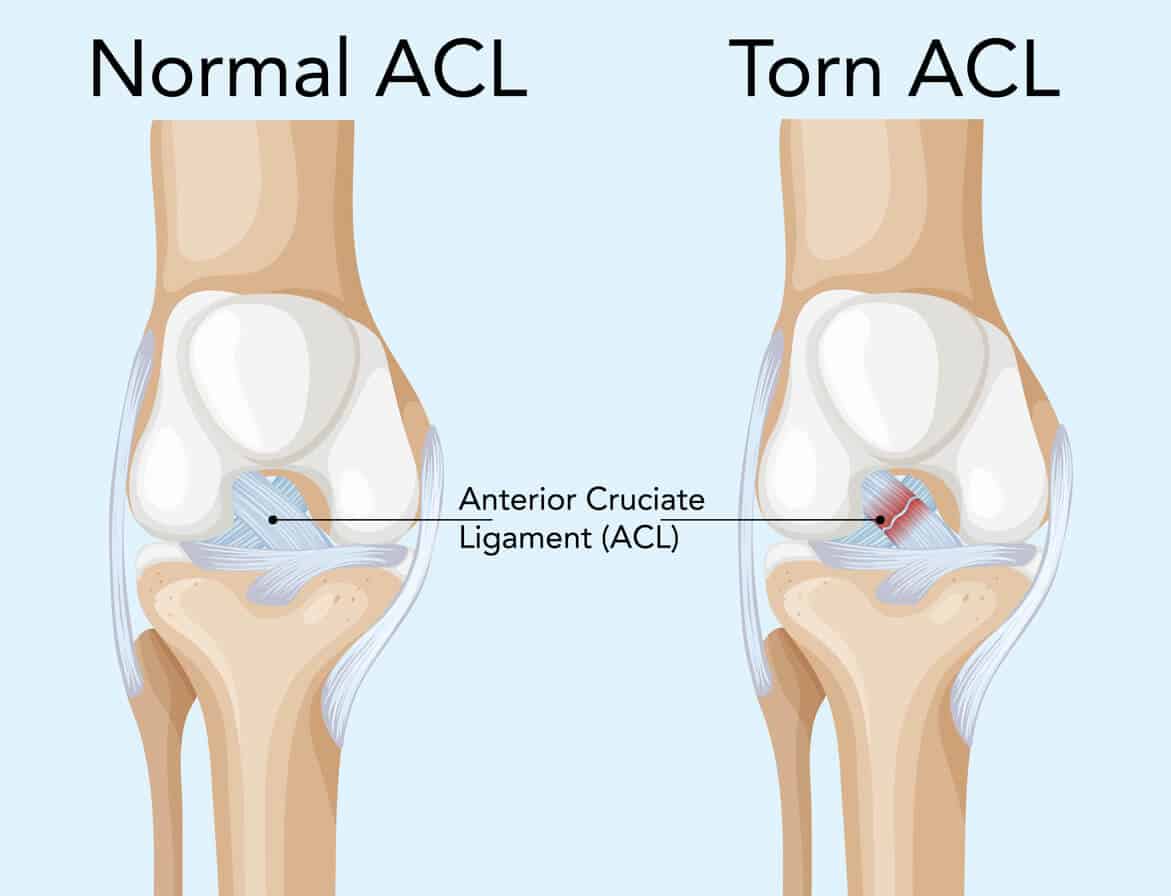
Prompt diagnosis using advanced MRI and stress radiographs, followed by expert surgical reconstruction, is vital to restore knee stability, protect articular cartilage, and prevent premature post-traumatic osteoarthritis.
Anatomy of the Injured Knee: Naming All 5 Key Ligament Structures
A true multi-ligament knee injury involves coordinated damage across the central pivot and peripheral stabilizers of the knee joint:
- 1. Anterior Cruciate Ligament (ACL): The primary central pivot preventing anterior tibial translation and rotational instability during cutting and pivoting.
- 2. Posterior Cruciate Ligament (PCL): The strongest ligament in the knee, preventing backward displacement of the shin bone relative to the thigh.
- 3. Medial Collateral Ligament (MCL): The primary stabilizer on the inner side of the knee protecting against valgus (outward) opening forces.
- 4. Lateral Collateral Ligament (LCL): The primary stabilizing cord on the outer side of the knee resisting varus (inward) stress.
- 5. Posterolateral Corner (PLC): A complex anatomical web of structures on the outer-back aspect of the knee (including the popliteus tendon and popliteofibular ligament) that restrains extreme external rotation and varus tilting.
Surgical Timing Strategy: Single-Stage vs. Two-Stage Procedures
Determining whether to perform reconstruction in a single operation or stage it across multiple interventions depends on soft-tissue condition, vascular integrity, and timing from injury:
| Surgical Strategy | When It Is Indicated | Clinical Pros & Cons |
|---|---|---|
| Early Single-Stage Reconstruction (Gold Standard) | Performed within 3 weeks of injury before extensive fibrous scar tissue and joint contractures develop. | Allows precise anatomical identification of torn tissue planes, single rehabilitation cycle, and faster functional recovery. |
| Two-Stage Staged Reconstruction | Indicated in open fractures, severe vascular repair, gross soft-tissue blistering, or delayed presentation (> 3 weeks). | Phase 1 applies a temporary external fixator and repairs vascular structures; Phase 2 performs definitive ligament reconstruction once soft tissues heal. |
Step-by-Step Surgical Sequence & Tensioning Hierarchy
Performing multi-ligament reconstruction requires a strict, biomechanically validated surgical sequence to ensure proper joint reduction and graft tensioning without tunnel convergence:
- Step 1: Examination Under Anesthesia & Diagnostic Arthroscopy: Confirming laxity patterns and assessing associated meniscal and chondral damage.
- Step 2: Peripheral Open Dissection: Making careful open incisions to address posteromedial and posterolateral corner (PLC) injuries and preparing bone tunnels before cruciate work.
- Step 3: Cruciate Tunnel Drilling: Creating precise anatomical bone tunnels in the femur and tibia for the Anterior Cruciate Ligament (ACL) and Posterior Cruciate Ligament (PCL) while avoiding tunnel overlap.
- Step 4: Graft Passage & Fixation Hierarchy: Following the established tensioning sequence:
- 1st: Posterior Cruciate Ligament (PCL) – utilizing a dedicated peroneus longus autograft to establish the central posterior axis.
- 2nd: Anterior Cruciate Ligament (ACL) – utilizing ipsilateral/contralateral hamstring or quadriceps autograft to restore pivot stability.
- 3rd: Posterolateral Corner (PLC) & Lateral Collateral Ligament (LCL) – using hamstring or quadriceps autograft strands.
- 4th: Medial Collateral Ligament (MCL) / Posteromedial structures.
Exclusive 100% Autograft Choices: Hamstring, Quadriceps & Peroneus Longus
Dr. Pritpal Singh Saini exclusively utilizes 100% autografts (the patient's own tissue) with zero donor allografts, ensuring superior biocompatibility, rapid biological incorporation, and zero risk of disease transmission:
Exclusive Autograft Selection Matrix
Tailored tissue harvesting for robust multi-ligament stability:
Using the ipsilateral or contralateral hamstring and quadriceps tendons provides exceptionally strong multi-stranded constructs for cruciate and collateral stability, while the peroneus longus tendon offers outstanding biomechanical load-bearing properties specifically tailored for demanding Posterior Cruciate Ligament (PCL) reconstructions.
Risks of Inadequate Treatment: Joint Stiffness & Chronic Instability
Failing to treat a multi-ligament knee injury or executing improper surgical sequencing leads to severe, long-term disability:
- Chronic Joint Instability & Subluxation: Persistent giving way of the knee, leading to repeated falls and rapid destruction of meniscal cartilage.
- Severe Post-Operative Stiffness (Arthrofibrosis): Inability to bend or straighten the knee due to extensive scarring if early protected range-of-motion protocols are omitted.
- Graft Stretching & Failure: Incorrect tensioning sequence causing one ligament to over-constrain while another remains loose, resulting in secondary graft rupture.
Operating Room Sterility & Arthroscopic Precision
Multi-ligament reconstruction is an extensive, multi-hour arthroscopic and open procedure that demands immaculate sterile theater protocols.
Multi-Layered Trauma & Arthroscopic Infection Control
- Laminar Airflow Clean Theatres: Ultra-clean positive-pressure HEPA air filtration protecting extensive open and arthroscopic surgical fields.
- CSSD Monitored Sterilization: Audited autoclave cycles for all specialized arthroscopic instrumentation and graft preparation stations.
- Vascular & Neural Protection: Meticulous open dissection safeguarding the popliteal artery and common peroneal nerve around the knee joint.
9 to 12 Month Phased Rehabilitation Timeline
Rehabilitating a multi-ligament reconstruction is a disciplined, long-term journey requiring close supervision:
| Timeframe | Graft Healing & Joint Status | Permitted Physical Function | Rehabilitation & Physiotherapy Focus |
|---|---|---|---|
| Months 1 to 2 | Protected graft incorporation; initial soft-tissue healing and swelling reduction. | Strict non-weight bearing or touch-down weight bearing in a locked hinged brace. | Passive range of motion within safe limits, patellar mobilization, and quadriceps activation. |
| Months 3 to 6 | Ligamentization phase; cellular remodeling of tendon grafts underway. | Progressive transition to partial and full unassisted weight bearing; discarding crutches. | Stationary cycling, closed-chain strengthening, and proprioceptive balance training. |
| Months 6 to 9 | Maturation of bone tunnel integration and graft tensile strength. | Resuming light jogging, straight-line running, swimming, and routine work duties. | Agility drills, resistance training, and neuromuscular control exercises. |
| Months 9 to 12+ | Full structural graft maturation and tissue consolidation. | Return to competitive pivoting sports, contact athletics, and heavy activities. | Sport-specific plyometrics, functional testing, and final medical clearance. |
Surgery Costs & Cashless Mediclaim in Jamshedpur
Multi-ligament knee surgery packages depend on the number of structures reconstructed, the autograft harvesting required, and the hospital room category.
Emergency Cashless Insurance & TPA Support
We cover almost all major private health insurance policies, corporate TPAs, and recognized health panels.
Because complex multi-ligament knee injuries resulting from road accidents or major trauma represent urgent surgical necessities, health policies cover hospitalization and surgical expenses. Families should share the patient's insurance card and accident details directly on our clinic WhatsApp at +91 7739798850 for immediate pre-authorization desk assistance.
Confirm on WhatsAppOur administrative desk ensures transparent, upfront billing covering arthroscopic consumables, specialized fixation buttons, autograft preparation fees, and follow-up care with zero hidden surprises.
Frequently Asked Questions by Patients & Families
Can knee ligament injuries be managed conservatively without surgery?
Yes. Conservative management is highly effective for partial tears, isolated low-grade Medial Collateral Ligament (MCL) sprains, or selected non-displaced injuries. It involves relative rest, controlled ice therapy, specialized hinged knee bracing, and structured physiotherapy to strengthen surrounding quadriceps and hamstring muscles. However, complete tears of the cruciate ligaments or severe multi-ligament instabilities require surgical reconstruction.
What is a multi-ligament knee injury?
A multi-ligament knee injury occurs when two or more major stabilizing structures of the knee—including the Anterior Cruciate Ligament (ACL), Posterior Cruciate Ligament (PCL), Medial Collateral Ligament (MCL), Lateral Collateral Ligament (LCL), and Posterolateral Corner (PLC)—are torn simultaneously, often resulting from high-energy trauma or knee dislocation.
Is multi-ligament reconstruction performed as a single-stage or two-stage procedure?
Modern orthopedic consensus strongly favors an early single-stage reconstruction performed within 3 weeks of injury. This allows anatomical repair and reconstruction before extensive scar tissue develops. A two-stage approach is reserved for cases with severe vascular compromise, open wounds, or gross soft-tissue trauma requiring temporary external fixation first.
What is the exact surgical sequence during multi-ligament knee reconstruction?
The precise surgical sequence typically starts with open peripheral dissections (posteromedial and posterolateral corners), followed by arthroscopic tunnel preparation for the cruciate ligaments. Grafts are passed, and tensioning and fixation follow a strict order: starting with the Posterior Cruciate Ligament (PCL) to establish the central posterior axis, followed by the Anterior Cruciate Ligament (ACL), then posterolateral corner structures (including the Lateral Collateral Ligament), and finally medial structures (including the Medial Collateral Ligament).
Which autograft tissues are used in multi-ligament knee reconstruction?
Dr. Pritpal Singh Saini exclusively utilizes 100% autografts (the patient's own tissue) with zero donor allografts. This includes ipsilateral or contralateral hamstring tendons, quadriceps tendon for ACL, MCL, and LCL reconstructions, and the peroneus longus tendon specifically tailored for robust PCL reconstruction.
Clinical References & Scientific Evidence
1. LaPrade RF, Chahla J, DePhillipo NN, et al. "Single-Stage Multiple-Ligament Knee Reconstructions for Sports-Related Injuries: Outcomes in 194 Patients." The American Journal of Sports Medicine. 2019;47(11):2563-2571.
2. Buyukdogan K, Laidlaw MS, Miller MD. "Surgical Management of the Multiple-Ligament Knee Injury." Arthroscopy Techniques. 2018;7(2):e147-e164.
3. Moatshe G, Chahla J, Brady AW, et al. "The influence of graft tensioning sequence on tibiofemoral orientation during bicruciate and posterolateral corner knee ligament reconstruction." The American Journal of Sports Medicine. 2018;46(8):1863-1869.