When Is Knee Replacement Actually Required?
Total Knee Replacement (also known as Total Knee Arthroplasty or TKA) is an elective reconstructive procedure. It is not an emergency surgery; it is indicated when knee arthritis has degraded bone and cartilage to the point where simple daily living becomes painful and restricted.
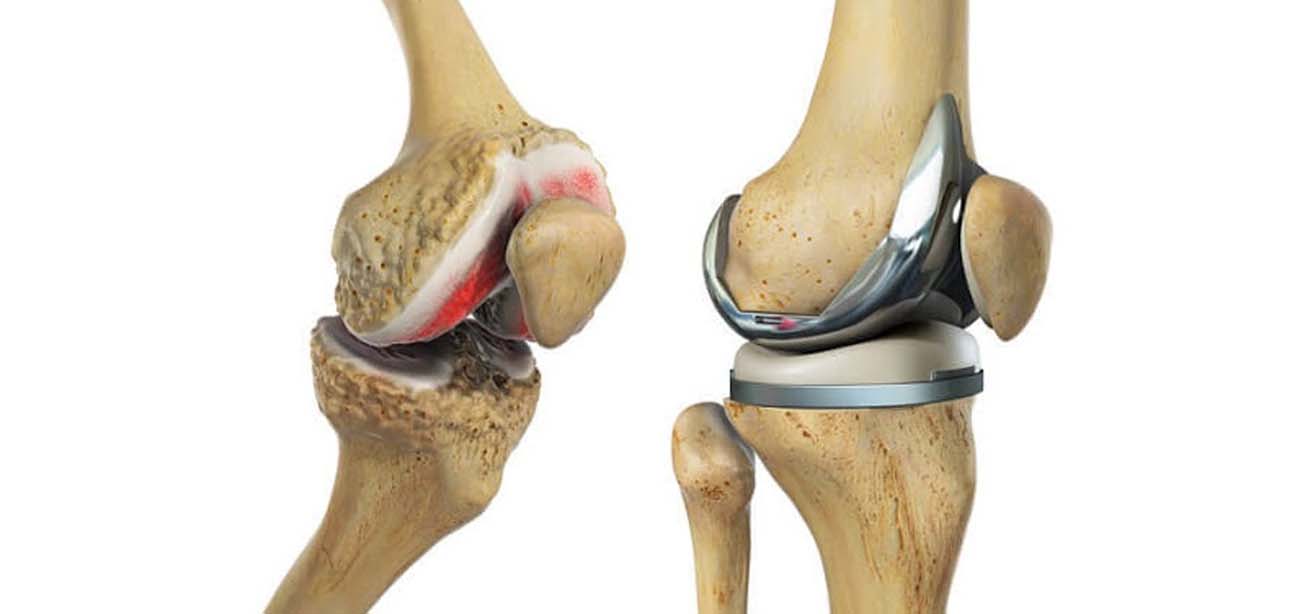
In our practice, surgery is considered only when non-operative treatments (lifestyle modification, physical therapy, pain medications, or joint injections) have failed to provide functional relief. The primary indications include:
- Severe, Continuous Joint Pain: Persistent pain that limits walking beyond 10–15 minutes, disturbs sleep, or hurts even while sitting or resting.
- Advanced Osteoarthritis (Grade 3 or 4): Severe loss of cartilage thickness resulting in painful bone-on-bone contact verified on weight-bearing X-rays.
- Angular Leg Deformity: Visible inward bowing ("bandy legs" / varus) or outward angling ("knock-knees" / valgus) due to asymmetrical joint collapse.
- Loss of Knee Mobility: Difficulty fully bending or straightening the leg, preventing standard chair transfer or stair climbing.
How the Surgery Is Performed: Muscle-Sparing Precision
Knee replacement is essentially a resurfacing rather than an extraction of your entire knee. The surgeon carefully shaves away only the worn, rough 8 to 9 mm of cartilage and damaged bone from the ends of the femur (thigh bone) and tibia (shin bone), substituting them with smooth, engineered prosthetic bearings.
Preserving Your Natural Muscles (Subvastus/Midvastus): Older approaches required cutting straight through the quadriceps muscle tendon. Today, muscle-sparing approaches go beneath or between muscle planes without severing the quadriceps tendon. This technique minimizes bleeding, reduces post-operative pain, and preserves the patient’s ability to actively straight-leg raise immediately after surgery.
Accurate Soft-Tissue Balancing: Aligning the prosthetic components so that the knee is stable in both flexion and extension is essential. Precise ligament tension prevents joint instability and uneven implant wear.
Implant Materials & Expected Lifespan
Prosthetic components are constructed from biocompatible alloys and specialized polymers engineered to withstand continuous human weight-bearing forces:
| Component | Material | Function |
|---|---|---|
| Femoral Shell | Cobalt-Chromium / Oxidized Zirconium | Replaces the worn end of the thigh bone with a smooth, contoured gliding curve. |
| Tibial Baseplate | Titanium Alloy / Cobalt-Chrome | Fixes securely to the prepared top of the tibia bone using surgical bone cement. |
| Articular Cushion | Highly Cross-Linked Polyethylene (HXLPE) | Functions as artificial joint cartilage to eliminate friction and absorb shock. |
| Patellar Button | Medical Polyethylene (Selected cases) | Resurfaces the undersurface of the kneecap if severe erosion or arthritis is present. |
Implant Lifespan: Long-term registry data from international joint registries confirm that over 90% to 95% of modern knee implants function reliably for 20 to 25 years. Maintaining reasonable body weight and avoiding high-impact running or jumping ensures maximal durability.
Operating Room Sterility: Why Infection Prevention Dictates Quality
In orthopaedic surgery—and joint replacement in particular—clinical success is inextricably linked to absolute sterility. Because an artificial implant has no natural biological blood supply, the body cannot easily deploy immune defenses if bacteria reach the implant during surgery. Preventing infection before it can start is therefore our single highest medical priority.
To eliminate this risk, we perform joint replacements exclusively in accredited hospitals equipped with advanced infection-control infrastructure and dedicated orthopaedic teams:
Multi-Layered Infection Control Protocols
- Laminar Airflow Operating Theatres: Continuous positive-pressure HEPA filtration delivering ultra-clean, particle-free air across the sterile surgical field.
- Central Sterile Services (CSSD): Multi-stage, monitored sterilization of all instrumentation adhering strictly to international infection benchmarks.
- Specialized Surgical Teams: Operation theatre nurses, technicians, and anaesthetists trained specifically in complex arthroplasty protocols.
- Medical-Grade Barrier Systems: Specialized sterile exhaust suits, disposable impermeable drapes, and targeted perioperative antibiotic protocols.
Maintaining these hospital infrastructure standards, advanced air handling systems, and single-use sterile consumables naturally influences the overall package cost compared to conventional general surgical units. However, this investment directly safeguards your implant, prevents avoidable complications, and ensures that your path to walking again is safe and definitive.
Recovery & Day-1 Walking Protocol
Modern joint recovery protocols prioritize immediate mobilization. With targeted Adductor Canal Blocks (which block pain sensations while keeping the leg muscles fully responsive), post-operative recovery proceeds methodically:
| Timeframe | What Happens | Functional Goal |
|---|---|---|
| Day 1 (Within 24 Hours) | Bedside physiotherapy and quad activation | Standing and walking with the support of a walker. |
| Day 2 to 4 (Discharge) | Safe stair navigation and knee flexion exercises | Independent toilet visits; hospital discharge to home. |
| Weeks 2 to 3 | Wound evaluation & stitch removal (approx. day 14) | Transitioning from a 4-point walker to a single walking stick. |
| Weeks 4 to 6 | Gait normalization and active muscle strengthening | Walking without aids; resumption of independent driving and desk work. |
| Months 3+ | Long-term muscle endurance | Comfortable walking, social events, domestic travel, and low-impact exercise. |
Surgery Costs & Cashless Insurance in Jamshedpur
Total knee replacement pricing is influenced by your clinical requirements (unilateral vs. bilateral), chosen implant technology, room category, and the hospital's sterility infrastructure tier.
Comprehensive Cashless Insurance Support
We cover almost all major private health insurance policies, corporate TPAs, and recognized health panels.
Because coverage, room-rent limits, copay terms, and waiting periods vary widely between individual insurance policies and corporate networks, please share your policy card directly via WhatsApp prior to admission to check your eligibility and ensure smooth cashless pre-authorization.
Confirm Insurance on WhatsAppPatients receive clear pre-operative financial counseling covering implant costs, operating theatre fees, anesthesia, room rent, and initial post-discharge medications.
Frequently Asked Questions
Is knee replacement surgery painful?
Severe pain is prevented using regional nerve blocks (like the adductor canal block) combined with local infiltration and modern multimodal oral analgesics. Patients feel comfortable enough to stand and walk on Day 1.
Can I sit cross-legged or use Indian toilets?
Modern implants accommodate high knee flexion. However, frequent deep squatting or cross-legged floor sitting places high mechanical loads on the polyethylene plastic spacer. To protect your implant from premature wear, using a Western toilet and chairs is clinically recommended.
Should both knees be replaced at the same time?
Simultaneous bilateral surgery is considered for patients who are medically fit and do not possess unmanaged cardiac or pulmonary conditions. If medical risks exist, the procedure is safely staged a few weeks or months apart.
When can I resume driving or desk work?
Most patients comfortably resume sedentary or desk work within 3 to 4 weeks. Driving an automatic transmission car can typically restart once emergency brake reflex power is fully recovered (typically by 4 to 6 weeks).
Clinical References & Literature
1. Evans JT, et al. "How long does a knee replacement last? A systematic review and meta-analysis of case series and national registry reports with greater than 15 years of follow-up." The Lancet. 2019;393(10172):655-663.
2. Carr AJ, et al. "Knee replacement." The Lancet. 2012;379(9823):1331-1340.
3. Goyal N, et al. "A Multimodal Pain Protocol Reduces Postoperative Pain and Narcotic Requirements After Total Hip and Knee Arthroplasty." Clinical Orthopaedics and Related Research. 2013;471(1):154-159.